
Descrição
Informações Sobre o Produto
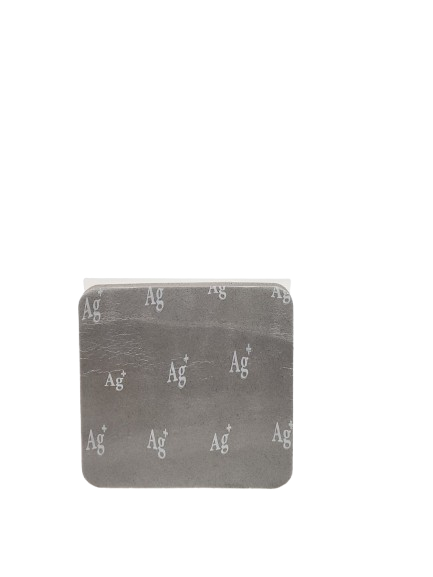
Difa ® Ag with Exulock Technology Family (adhesive and non-adhesive} is antimicrobial absorbent, atraumatic
polyurethane foam dressing with uniformly distributed highly absorbing powder or super absorbent backing
layer. Exulock Technology Foam has super absorbent characteristics so upon contact with wound exudates, the
foam massively absorbs all exudates forming a soft coherent gel that is locked within the foam matrix providing a
super exudate managing system with gentle gelling action that allows easy removal of the dressing. The Polyurethane
foam laminated with waterproof, bacteria proof and virus proof polyurethane film that prevents the strike
of Due to the presence of Silver ions, Difa® Ag Exulock Family hasa broad spectrum antimicrobial activity which
helps reduce wound contamination and acts as antimicrobial barrier for wounds at high risk of infection.
-broad spectrum antimicrobial activity which helps reduce wound contamination and acts as antimicrobial barrier for woundsat high risk of infection.
-High Absorption Capacity, so increases wearing time.
-Contains exudate locking technology, so reduces risk of leakage and can be used under compression.
-Exudates are easily distributed throughout the wound dressing, so no skin maceration.
-No Strike-through, so no fear of clothes and bed lining sheets staining and reduces risk of cross infection.
-Waterproof, bacteria proof and virus proof outermost layer.
-Highly breathable dressing allows gaseous changes which is ideal for wound healing.
-Non-adherent gel forming wound dressing allows easv removal of the dressing without oain.
-The additional carbon layer in Difa® Ag C Sealed Edges and Difa® Ag C Adhesive provides superior bacterial and odor adsorption.
Used for infected wounds or wounds at high risk of infection, with moderate to heavy drainage/exudation rate:
-Pressure ulcers stage il and superficial stage 111.
-Partial and full thickness diabetic foot ulcers.
-Venous insufficiency leg ulcers.
-Partial and full thickness arterial ulcers.
-Partial thickness burns and abrasions.
-Open surgical wounds.
-Skin tears..
1. Limpar a ferida de acordo com os protocolos clínicos locais.
2. Escolher um tamanho de penso que ultrapasse as margens da ferida em pelo menos dois centimetros.
3. Retirar o penso estéril da embalagem utilizando uma técnica assética.
Para variantes não adesivas:
1. Non-Adhesive variants can be cut to fit awkward areas. When used under compression therapy, the dressing must be cut to the size of
the wound.
2. Colocar o penso no local da ferida.
3. Será necessário utilizar um penso secundário de fixação ou uma ligadura, para fixar o penso no lugar.
– For adhesive variants:
1. Retirar a janela central em papel (se existente).
2. Retirar a banda maior película de proteção, expondo a parte adesiva do penso.
3. Posicionar e retirar a banda mais pequena da película de proteção.
4. Retirar lentamente a moldura de papel ao mesmo tempo que alisa os rebordos do penso, para garantir uma boa aderência.
5. Para retirar, soltar o rebordo antes de remover totalmente o penso.
– Dressing change and removal:
• Dressing change frequency will depend on patient condition as well as wound exudate level.
Change dressing when reached its maximum exudate management level or as instructed by a healthcare professional.
• To remove an adhesive dressing, loosen the adhesive film border before lifting the dressing away from the wound.
• To remove non-adhesive dressing, gently lift the corners of the dressing away from the wound.
• Cleanse the wound prior to application of new dressing.



Avaliações
Ainda não existem avaliações.