
Description
Product Info
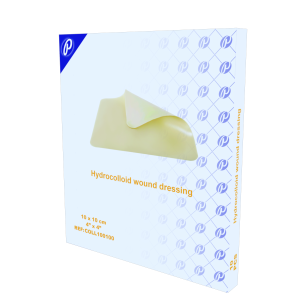
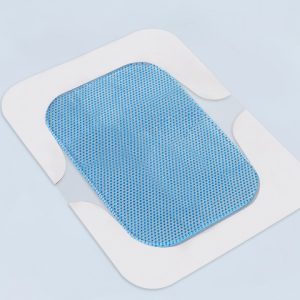
ESPUMA® ADHESIVE PLUS is the same composites of ESPUMA® NON-ADHESIVE, placed centrally on a colloid Adhesive polyurethane film substrate that extends beyond the margin of the island pad.
Under supervision of a healthcare professional, dressings can be used in management of partial to full thickness wounds including:
- Ulcers (venous, arterial, diabetic)
- Pressure ulcers
- Donor sites
- Post-operative wounds
- Second degree burns
- Skin abrasions
Can be used throughout the healing process to provide protection for the types of wounds indicated.
- Do not use in case of known sensitivity to polyurethanes or polyacrylates.
- The dressing shall not be used on third degree burns and wounds with excessive bleeding.
- The dressing shall not be used as a primary dressing on dry wounds, dry eschar, sinus tracts.
- Dressings can be used on patients who are in treatment for a local or systemic infection at the discretion of a healthcare professional.
- Sterility of the dressing is guaranteed unless the pouch is damaged or opened prior to use.
- Do not cover the dressing with occlusive films or tapes, as they may reduce moisture vapor loss, which could impair the effectiveness of the dressing.
- The dressing should not be used in combination with oxidizing agents such as hydrogen peroxide or hypochlorite solution as these solutions may affect the structure and performance of the polyurethane foam. Ensure that any other evaporating solution is completely dried off before dressing application.
- At the time of dressing change, if the dressing is adhered to the wound surface, saturate with normal saline.
- Consult a healthcare professional if there are signs of infection or sensitivity (allergic reaction).
- Reuse of the dressing may lead to increased risk of infection or cross contamination.
- A healthcare professional should frequently inspect and manage wounds which are solely or partially caused by arterial insufficiency in accordance with local standards.
- Cavity sizes are not for use in dry wounds or deep cavity wounds with only a small opening.
- In order to minimize the risk of potential infection hazard or environmental pollution, disposing the medical device should follow disposal procedures according to applicable local laws.
Hydrocellular dressings are made from a polyurethane base and are permeable to both gases and water vapor. Their hydrophilic properties allow high absorptive properties while they also provide thermal insulation. Foam dressings also provide a cushioning action that allows pressure relief for patients subjected to long hospitalization periods. This creates a prophylactic indication for pressure injuries.
1. Cleanse the wound in accordance with local clinical protocols.
2. Select an appropriate dressing size that overlaps the wound margin by at least two centimeters.
3. Remove the sterile dressing from the package using aseptic technique.
For adhesive variants:
1. Remove the central paper window (if present).
2. Remove the large flap of the release liner to expose the adhesive portion of the dressing.
3. Position into place while removing the smaller flap of the release liner of the dressing.
4. Slowly remove the paper frame while smoothing down around the dressing to ensure good adhesion.
5. To remove the dressing, loosen the border before lifting the dressing away from the wound.
Espuma® Adhesive Plus | Size | Pieces/Case | Boxes/Case |
ESPADHPLUS5050 | 50×50 mm | 10 | 48 |
ESPADHPLUS7575 | 75×75 mm | 10 | 48 |
ESPADHPLUS75100 | 75×100 mm | 10 | 48 |
ESPADHPLUS100100 | 100×100 mm | 10 | 48 |
ESPADHPLUS100150 | 100 x 150 mm | 5 | 24 |
ESPADHPLUS100200 | 100 x 200 mm | 5 | 24 |
ESPADHPLUS100250 | 100×250 mm | 5 | 24 |
ESPADHPLUS100300 | 100×300 mm | 5 | 24 |
Other sizes are available upon request




Reviews
There are no reviews yet.